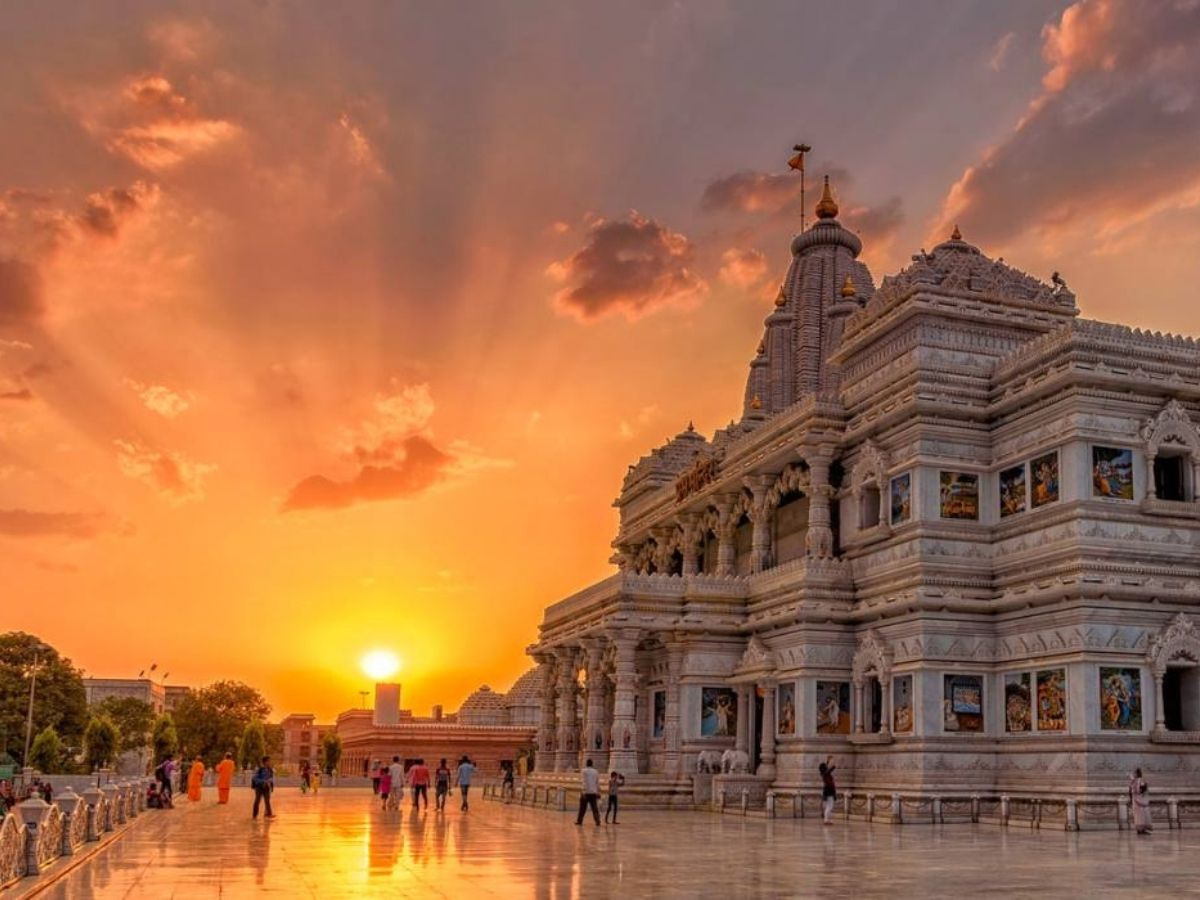
SEO Title: Gen Z Pilgrimage Reset: Why Mathura-Vrindavan Is Becoming a Youth Travel Destination in 2026
Meta Description: Discover why Gen Z is turning to Mathura-Vrindavan for short spiritual escapes, cultural experiences and digital detox in 2026, and what this means for Braj's future.
Focus Keyphrase: Gen Z spiritual tourism in Mathura-Vrindavan
Secondary Keywords:
Mathura Vrindavan tourism 2026, spiritual tourism India, Gen Z travel trends 2026, Mathura investment, Vrindavan development, Braj tourism, property investment in Mathura, short spiritual trips India
Suggested Slug:
gen-z-spiritual-tourism-mathura-vrindavan-2026
What If the Next Big Travel Trend Isn't a Beach, Hill Station or Café?
For years, India's youth travel culture has been associated with mountains, beaches, music festivals, cafés and weekend road trips.
But something interesting is happening in 2026.
A growing number of young Indians are adding something very different to their travel plans:
spiritual destinations.
Not necessarily as traditional pilgrims.
Not necessarily for long religious journeys.
And increasingly, not even for a conventional holiday.
Instead, young travellers are looking at places such as Mathura, Vrindavan, Varanasi, Ayodhya and Rishikesh as places to slow down, reconnect with culture, take a break from digital noise and experience something that feels more meaningful.
This emerging behaviour could be especially significant for
Mathura-Vrindavan, where spirituality, heritage, food, music, architecture and rapidly developing infrastructure already intersect.
The interesting question is not simply:
“Why are young people visiting temples?”
The more important question is:
“Why is an always-online generation beginning to travel towards places that encourage them to slow down?”
The 2026 Traveller Is Looking for More Than a Photograph
Travel behaviour among younger Indians is changing.
A 2026 report on Gen Z travel found that seven in ten young travellers would prefer several shorter trips rather than one long annual holiday. The same report highlighted a strong preference for personalised experiences, spontaneous travel and destinations that are not simply chosen because they have gone viral online.
That creates an interesting opportunity for destinations like Mathura.
A weekend in Braj can become more than a checklist of famous locations.
It can include:
- Morning darshan
- Walking through old lanes
- Local Braj food
- Yamuna-side experiences
- Temple architecture
- Cultural performances
- Local markets
- Photography
- Spiritual music
- Heritage exploration
- Quiet personal time
This is a different type of tourism.
It is less about
“How many places can I cover?”
And more about:
“How did this place make me feel?”
That distinction matters enormously for the future of spiritual destinations.
Gen Z Is Bringing a New Meaning to Spiritual Tourism
According to recent redBus data reported in 2026, Gen Z and young travellers accounted for
more than 53% of travel to spiritual destinations in India during FY26. The report also points towards digital discovery and last-minute booking behaviour as important factors in this growing participation.
That does not mean every young traveller suddenly wants a traditional pilgrimage.
Instead, spirituality is becoming part of a broader travel experience.
For one person, it could mean attending aarti.
Another, it could mean sitting quietly beside the Yamuna.
Someone else, it might mean exploring Braj's mythology and architecture.
And for another traveller, it may simply be a two-day escape from a city filled with notifications, traffic and screens.
This is where Mathura-Vrindavan has a unique advantage.
It does not need to manufacture an identity for this audience.
The identity already exists.
The opportunity is to make that identity accessible to a generation that experiences the world through smartphones, short-form videos, maps, reviews and instant bookings.
The “Spiritual Reset” Could Become the New Weekend Getaway
Imagine a young professional in Delhi-NCR.
Monday to Friday is work.
Meetings.
Emails.
Traffic.
Notifications.
Screens.
Then Friday evening arrives.
Instead of another mall, café or conventional resort, they decide to travel to Mathura-Vrindavan for two days.
Saturday begins with a temple visit.
Then comes local food, a heritage walk, photography and time around the cultural landscape of Braj.
Sunday is slower.
No packed itinerary.
No pressure to visit ten attractions.
Just a change of environment.
This is what we can call the
“spiritual reset”: a short journey designed not only for sightseeing but for mental and cultural reconnection.
It is an emerging travel concept worth watching because it fits perfectly with the short-trip behaviour increasingly visible among younger travellers.
And Mathura is naturally positioned for it.
Why Mathura-Vrindavan Is Particularly Interesting in 2026
The youth tourism story becomes even more interesting when it meets infrastructure development.
Mathura-Vrindavan is not developing in isolation.
The broader Braj region is being shaped by tourism, connectivity, hospitality and infrastructure initiatives.
Recent reporting has highlighted a significant pipeline of infrastructure activity around the Vrindavan region, with estimates putting planned and executing infrastructure signals at around ₹7,000 crore. Importantly, however, announced projects should not automatically be treated as completed projects. Their actual impact depends on execution, timelines and utilisation.
Connectivity is another important piece of the puzzle.
A proposed ₹1,645-crore, 15-km link connecting the Yamuna Expressway with the Delhi-Agra Highway in Mathura is designed to improve regional connectivity, including a six-lane road, a Yamuna bridge and multi-level parking.
For tourism, better connectivity can change something fundamental:
How easy it feels to make the trip.
And convenience often determines whether a destination becomes an occasional pilgrimage or a repeat weekend experience.
From Temple Visit to Cultural Experience
One of the biggest opportunities for Mathura is that its appeal does not end at its temples.
The Braj region contains a much larger cultural ecosystem.
Mathura.
Vrindavan.
Govardhan.
Barsana.
Nandgaon.
Gokul.
Mahaban.
Baldev.
These destinations form part of Uttar Pradesh's Krishna/Braj tourism framework.
For younger travellers, this creates the possibility of turning a single destination into a
multi-experience journey.
Instead of:
“Let's visit Vrindavan.”
The trip becomes:
“Let's experience Braj.”
That is a much bigger tourism proposition.
It can include mythology, food, music, architecture, festivals, local crafts, history, nature and spirituality.
And it creates reasons for visitors to stay longer, return more frequently and explore beyond the most famous locations.
The Digital Detox Paradox
Here is perhaps the strangest part of this trend.
Gen Z discovers destinations through the internet.
They search on Google.
They watch Reels.
It save Instagram locations.
They check reviews.
They use digital maps.
And then they travel to places where they may intentionally want to use their phones less.
That is the paradox.
Technology is helping young people discover places that help them temporarily escape technology.
Mathura-Vrindavan fits beautifully into this paradox.
A traveller may discover a temple through a Reel, research the history through YouTube, book accommodation online and then arrive in Braj looking for something that cannot be completely captured on a screen.
The physical experience becomes the product.
And that is increasingly valuable in a world where digital content is abundant but genuine experiences remain scarce.
What Does This Mean for Property in Mathura?
This is where tourism and real estate begin to overlap.
A growing destination does not only need places to visit.
It needs places to stay.
It needs restaurants.
Homestays.
Hotels.
Rental homes.
Second homes.
Guest accommodation.
Service providers.
Retail.
Parking.
Maintenance.
Local transportation.
And residential communities.
The growth of hospitality interest in Vrindavan is already visible, with Royal Orchid Hotels announcing a new Regenta Z property in Vrindavan, citing the growing influx of pilgrims and leisure travellers.
That does not automatically mean every property in the region will appreciate equally.
That would be an irresponsible conclusion.
Location, title clarity, approvals, infrastructure, accessibility, development quality and actual demand all matter.
But it does suggest something important:
The economic story of Braj is gradually becoming larger than pilgrimage alone.
Why This Could Matter to a First-Time Property Buyer
For someone considering property in Mathura, the more useful question may not be:
“Will prices rise?”
Nobody can guarantee that.
A better question is:
“What is changing around the location I am considering?”
Look at the fundamentals.
1. Connectivity
How easily can people reach the property?
2. Tourism demand
Are visitors coming only during major festivals, or throughout the year?
3. Hospitality growth
Are hotels, stays and visitor facilities expanding?
4. Infrastructure execution
Are announced projects actually progressing?
5. Local ecosystem
Are shops, healthcare, roads, utilities and everyday services improving?
6. Long-term usability
Could the property work as a residence, second home, rental property or future family asset?
These questions create a much stronger decision framework than simply chasing a headline saying that a particular city is “the next big investment destination.”
The Bigger Shift: From Pilgrimage City to Experience City
This may be the most important change to watch.
For generations, Mathura-Vrindavan has primarily been understood through the lens of devotion.
That identity will remain central.
But tourism itself is becoming broader.
A visitor can be spiritual and curious.
Traditional and digital.
Young and devotional.
A traveller can come for Krishna, stay for the culture and return because the city gave them a sense of pause.
That combination is powerful.
The future of Mathura may therefore not be about replacing its spiritual identity.
It may be about
expanding the meaning of that identity for a new generation.
What Could the Next Five Years Look Like?
If the current direction continues, Mathura-Vrindavan could increasingly evolve into a destination where several types of visitors overlap:
The Devotee
Travelling primarily for faith and darshan.
The Cultural Traveller
Interested in Braj's history, architecture, music and traditions.
The Weekend Explorer
Looking for a short escape from Delhi-NCR and nearby cities.
The Wellness Traveller
Searching for quiet, reflection and slower experiences.
The Young Digital Traveller
Discovering destinations through social media but looking for experiences beyond the screen.
The Property Owner
Looking at Mathura not only as a place to visit, but as a place to own an asset.
When these audiences begin occupying the same ecosystem, the economic character of a destination can change.
The Real Opportunity May Be “Living Near What People Travel To Experience”
This is an idea that deserves more attention.
Real estate is traditionally discussed through roads, prices, returns and appreciation.
But another factor matters:
experience proximity.
If people repeatedly travel to a particular region because they value its culture, spirituality and lifestyle, properties within a well-connected and properly developed ecosystem can potentially benefit from that broader demand.
That does not make every plot or property a good investment.
It simply means the reason to evaluate property can become broader than speculation.
For some buyers, owning property near a destination they regularly visit may have lifestyle value even before financial value is considered.
And that is particularly relevant for second-home buyers and families looking for a connection with Braj.
A New Generation Is Asking a Different Travel Question
The old travel question was:
“Where should we go?”
The newer question may be:
“How do we want to feel when we come back?”
That is why the rise of youth spiritual tourism deserves attention.
Recent data indicates that young travellers are already becoming a major force in India's spiritual travel market.
For Mathura-Vrindavan, the opportunity is unusually rich because the region combines an established spiritual identity with a rapidly evolving tourism and infrastructure ecosystem.
The next chapter may therefore not be about making Mathura look like another modern tourist city.
It may be about allowing a new generation to experience
Braj in its own way.
Less checklist.
More connection.
Less “destination unlocked.”
More “experience remembered.”
And perhaps that is the most interesting investment story of all.
Final Thought
The future of Mathura may not be built only by people who come here to invest.
It may also be shaped by a generation that first comes here to
escape, explore, reflect and experience.
Some will visit for a weekend.
Some will return every year.
It may eventually choose to stay longer.
And a few may eventually decide to own a piece of the place they have grown attached to.
That is why the rise of Gen Z spiritual tourism is worth watching closely.
Because when a travel destination becomes part of someone's lifestyle, its story can become much bigger than tourism.
Thinking About Owning Property in Mathura?
Before making any property decision, evaluate location, title and documentation, approvals, infrastructure, connectivity, utilities and the actual development status of the project.
For buyers exploring residential plot opportunities in Mathura,
The Radhe Krishna Dham offers plotted development designed around the growing residential and tourism ecosystem of the region.
Visit the official project website to explore the current project details and available information.
The Radhe Krishna Dham | Mathura, Uttar Pradesh