Prem mandir Vrindavan
logo

The Radhe Krishna Dham

The Radhe Krishna Dham offering Best Plots in Mathura With Green Area Near By National Highway At Best Price.

Menu

Why Gen Z Is Investing in Land in Mathura Instead of SIPs and Stocks (2026)

Introduction

Scroll through any finance page on Instagram right now and you'll see the same debate playing out in the comments: SIPs vs. stocks vs. gold vs. "just buy land, bro." But somewhere in the last year, that last option stopped being a joke. Buy plots in Mathura. Gen Z investors — the same generation that grew up watching their parents' EMIs stretch across decades — are increasingly putting money into plots in spiritually and culturally significant destinations like Mathura, instead of parking everything in mutual funds they don't fully understand. This isn't nostalgia. It's a calculated, low-noise investment move — and The Radhe Krishna Dham by Luxia Developersits right at the center of this shift: residential plots in Mathura, in one of India's fastest-growing pilgrimage and tourism corridors. Here's why this generation is paying attention, and why land in Mathura specifically is becoming the asset nobody's talking about loudly, but everybody's quietly buying.

1. Gen Z Doesn't Trust "Invisible" Assets Anymore

A stock chart or a mutual fund NAV is a number on a screen. A plot of land is something you can visit, walk on, fence, and show your family. After watching market crashes, crypto wipeouts, and endless finfluencer disclaimers, many young investors now prioritize assets that are:
  • Tangible and verifiable
  • Free from daily volatility anxiety
  • Simple to explain to family and friends
Land ownership checks every box. You don't need a Bloomberg terminal to understand that a plot in a growing region tends to appreciate — you just need to watch the region grow.

2. Mathura Is No Longer "Just a Pilgrim Town"

Mathura and the wider Mathura-Vrindavan belt have quietly become one of India's most active development zones — temple corridors, improved road connectivity, tourism infrastructure, and rising footfall are reshaping the region year over year. For Gen Z investors scanning for undervalued locations before prices catch up, this combination of spiritual significance + active infrastructure growth is exactly the setup they look for. It's the same pattern early investors chased in emerging suburbs of bigger cities — except here it's backed by centuries of cultural pull that isn't going anywhere.

3. The "Buy Once, Escape Often" Lifestyle Trend

A recurring theme in Gen Z lifestyle content is the desire for a personal retreat space — somewhere outside the city to disconnect, recharge, or host a small gathering, without the commitment of a second home in an expensive metro. Owning a plot in Mathura fits this perfectly. It's:
  • Close enough to Delhi-NCR for weekend trips
  • Set in a spiritually calming environment
  • Flexible — build now, later, or hold as an appreciating asset
This "buy once, escape often" mindset is becoming a genuine sub-trend among young professionals who want ownership without the burnout of a full home-building project right away.

4. Land as the Original Inflation Hedge

Gen Z has grown up hearing about inflation eating into savings. Unlike a fixed deposit that loses real value over time, land historically holds and grows value as regions develop. Plots in a location like Mathura, where infrastructure and tourism activity are actively expanding, offer a hedge that doesn't require constant monitoring — a stark contrast to checking a trading app five times a day.

5. Fractional Ownership Culture Is Making Land Feel Accessible

A big reason older generations saw land as "out of reach" was the assumption that you needed massive capital upfront. That perception is fading. Structured residential plot projects — with clear pricing, phased payment options, and defined plot sizes — are making land entry points far more approachable for first-time young investors. The Radhe Krishna Dham is structured exactly this way: defined residential plots, transparent documentation, and a project designed for buyers who are serious but not necessarily ultra-wealthy.

6. Instagram-Worthy Isn't a Bad Thing — It's a Demand Signal

Gen Z buying decisions are heavily influenced by aesthetics and shareability, and spiritual tourism destinations are having a real cultural moment — temple architecture, ghats, sunrise reels, and devotional content consistently perform well across platforms. That online attention translates into real-world footfall. More visitors means more long-term demand for stays, homes, and eventually, land — a dynamic smart investors watch closely.

7. Community and "Vibe" Now Matter as Much as Location

Younger buyers aren't just asking "where" — they're asking "who else is here" and "what does this place feel like." A residential plot community in a devotional setting like Mathura offers something metro apartments can't: a slower pace, a spiritual undertone, and a shared sense of purpose among fellow plot owners. This community-first mindset is increasingly shaping where Gen Z chooses to put down long-term roots, even as a secondary or future home.@

8. Digital-First Documentation Builds Trust With a Digital-First Generation

One historic hesitation around land investment was the paperwork — unclear titles, informal deals, and opaque processes. Gen Z, having grown up with UPI, e-KYC, and digital contracts, expects the same clarity from real estate. Projects that offer clear documentation, verified layouts, and straightforward buying processes remove the single biggest trust barrier for younger buyers considering their first land purchase.

9. Parents Approve — Which Quietly Matters More Than You'd Think

For a generation often accused of impulsive spending, land investment is one of the rare financial decisions that earns immediate approval from parents and grandparents. It reads as responsible, culturally rooted, and long-term — a combination that makes it an easier "yes" in family conversations about money, especially when the location itself carries devotional meaning.

10. The Early-Mover Advantage Is Still Open — But Closing

Every growth corridor has a window where prices are still accessible before wider recognition drives them up. Mathura's ongoing development — from religious tourism initiatives to regional connectivity upgrades — suggests that window is active right now, not five years from now. For a generation obsessed with not missing the next big thing, that timing alone is a compelling reason to look seriously at plots in Mathura before broader demand catches up. @

Conclusion

Gen Z's relationship with money is evolving — less blind trust in traditional instruments, more preference for tangible, understandable, culturally meaningful assets. Land in a growing spiritual destination like Mathura checks every box this generation is quietly prioritizing: authenticity, appreciation potential, community, and a story worth telling. The Radhe Krishna Dham by Luxia Developer offers exactly this opportunity — residential plots in Mathura, backed by transparent documentation and positioned in one of India's most actively developing pilgrimage regions. If you're exploring your first real estate investment — or simply want an asset that feels as meaningful as it is smart — this might be the trend worth acting on before everyone else catches up. 📞 +91 9810505543 | 🌐 theradhekrishnadham.com

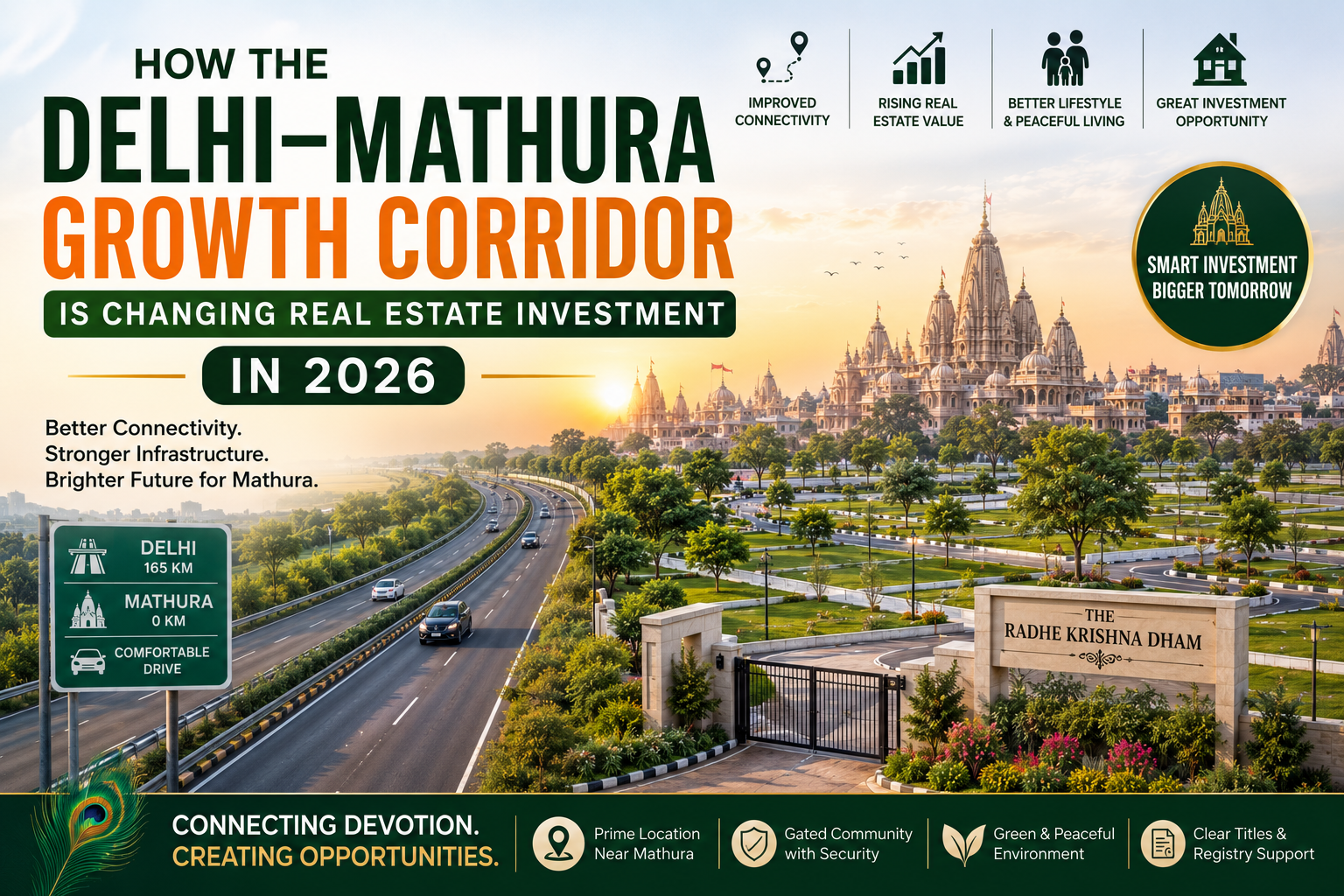
Delhi–Mathura Growth Corridor: Why Property Buyers Are Looking at Mathura in 2026

Introduction

India's real estate market is no longer driven only by metro cities. In 2026, buyers are increasingly looking toward emerging destinations that combine better connectivity, lifestyle advantages, and long-term investment potential. One such region attracting attention is the Delhi–Mathura Growth corridor.

Mathura, already known for its spiritual significance, is also benefiting from improved transportation links and increasing residential development. As connectivity between Delhi NCR and Mathura continues to improve, many families, professionals, and investors are evaluating the city as a destination for future property ownership.

If you're planning to Buy Plots in Mathura, understanding how regional connectivity influences real estate can help you make a more informed decision. @


Why Connectivity Matters in Real Estate

Real estate value is closely linked to accessibility. Areas with convenient road networks and faster travel times often experience higher demand over the long term.

Improved connectivity offers several advantages:

  • Easier travel for families
  • Better access to workplaces and businesses
  • Increased tourism
  • Stronger commercial activity
  • Improved quality of life

These factors contribute to growing interest in residential developments along important growth corridors.


The Delhi–Mathura Connection

Mathura enjoys a strategic location with direct road connectivity to Delhi NCR through major highways.

For many people, this means:

  • Convenient weekend travel
  • Easier family visits
  • Better access to urban facilities
  • Greater appeal for second-home buyers
  • Increased confidence among long-term investors

As travel becomes more comfortable, residential demand naturally expands.


Why Families Are Looking Beyond Metro Cities

Large cities continue to offer employment opportunities, but they also face challenges such as:

  • Traffic congestion
  • High property prices
  • Limited open spaces
  • Pollution
  • Fast-paced lifestyles

Many families now prefer destinations that provide:

  • Peaceful surroundings
  • Better work-life balance
  • Green environments
  • Community living
  • Affordable property options

Mathura is emerging as one of these preferred destinations.


Residential Plots Offer Greater Flexibility

Buying a residential plot allows homeowners to plan according to their own timeline.

Benefits include:

  • Freedom to design your home
  • Space for gardens and open areas
  • Future expansion possibilities
  • Long-term family asset
  • Complete ownership of land

These advantages make Residential Plots in Mathura attractive for both end-users and investors.


Key Factors to Consider Before Buying a Plot

Before making a purchase, buyers should verify:

Legal Documentation

Ensure ownership records and title documents are clear.

Project Planning

Choose communities with organized layouts and proper infrastructure.

Connectivity

Evaluate access to schools, hospitals, markets, and major roads.

Developer Reputation

Work with developers known for transparency and customer support.

Long-Term Potential

Consider future development plans around the project location.


Why Buyers Appreciate Planned Communities

Modern buyers increasingly value communities that provide:

  • Wide internal roads
  • Green surroundings
  • Gated security
  • Organized infrastructure
  • Peaceful environment
  • Easy accessibility

These features support comfortable living while enhancing long-term value. @


Why The Radhe Krishna Dham Is Designed for Modern Buyers

For families exploring Best Plots in Mathura, The Radhe Krishna Dham offers a thoughtfully planned residential community that combines peaceful surroundings with practical infrastructure.

Project Highlights

Premium Residential Plots

Gated Community

Wide Internal Roads

Green & Peaceful Environment

Clear Title & Registry Support

Excellent Connectivity

Whether you're planning your future home or building a long-term investment portfolio, choosing a transparent and well-planned project is an important first step.


Frequently Asked Questions

Why is the Delhi–Mathura corridor attracting property buyers?

Improved connectivity, easier travel, and growing residential demand are encouraging buyers to consider Mathura for long-term property ownership.

Are residential plots suitable for families?

Yes. Residential plots provide flexibility to design homes according to personal needs while offering long-term ownership benefits.

What should I verify before buying a plot?

Buyers should verify legal documents, title records, project planning, connectivity, and developer credibility.

Is Mathura suitable for long-term investment?

Every investment decision should be based on personal goals and due diligence. However, Mathura continues to attract attention because of its cultural importance, improving infrastructure, and growing residential interest.


Final Thoughts

The Delhi–Mathura Growth Corridor reflects a broader shift in how people choose where to live and invest. Better connectivity, peaceful surroundings, and planned residential communities are encouraging many buyers to look beyond traditional metro markets.

If you're exploring Buy Plots in Mathura, focus on projects that prioritize transparency, planning, and long-term livability. The Radhe Krishna Dham is designed to meet these expectations while offering families an opportunity to become part of one of India's most cherished spiritual destinations.

How India’s Spiritual Economy Is Driving Real Estate Growth in Mathura (2026 Guide)

India's Spiritual Economy Is Growing Faster Than Ever

Across India, spirituality is no longer limited to festivals or occasional temple visits. Millions of people are actively travelling to spiritual destinations throughout the year, seeking peace, cultural connection, wellness, and a slower pace of life. This shift has contributed to what experts increasingly describe as India's spiritual economy, where religious tourism, hospitality, local businesses, and residential development support one another.

Among the cities benefiting from this transformation, Mathura continues to stand out. Known worldwide as the birthplace of Lord Shri Krishna, the city is attracting not only pilgrims but also families, retirees, professionals, NRIs, and long-term investors.

As this trend grows, interest in Buy Plots in Mathura and Residential Plots in Mathura has increased significantly, reflecting changing buyer preferences that go beyond short-term investment.


What Is the Spiritual Economy?

The spiritual economy refers to the economic activity created by religious tourism, cultural heritage, wellness travel, festivals, hospitality, infrastructure, and related services.

It supports multiple sectors, including:

  • Tourism
  • Hotels and homestays
  • Retail businesses
  • Local employment
  • Infrastructure
  • Residential development
  • Transportation
  • Real estate

When more visitors choose to spend time in a destination throughout the year, demand for better facilities naturally follows. This creates opportunities for long-term urban development while preserving the city's cultural identity.


Why Mathura Is at the Center of This Transformation

Mathura has always been a city of faith. Today, however, it also represents a destination where tradition and modern aspirations meet.

Several factors contribute to its growing appeal:

A Living Spiritual Heritage

Mathura is home to centuries-old traditions, temples, festivals, and cultural experiences that attract visitors from across India and abroad.

Year-Round Visitor Activity

Unlike seasonal tourist destinations, Mathura receives visitors throughout the year because of regular religious events, celebrations, and family pilgrimages.

Better Regional Connectivity

Improving transportation links have made travelling to Mathura more convenient for people from Delhi NCR and nearby states, supporting both tourism and residential interest.

Expanding Urban Amenities

As the city grows, supporting infrastructure such as healthcare, education, retail, and civic facilities continues to improve, making Mathura increasingly suitable for long-term living.


A New Generation of Homebuyers Is Looking Beyond Metro Cities

Many buyers today are asking different questions than they did a decade ago.

Instead of focusing only on property prices, they also consider:

  • Is the environment peaceful?
  • Will my family enjoy living here?
  • Is there room to build the home I want?
  • Does the location support long-term value?
  • Can this become a second home or retirement destination?

These priorities are encouraging more families to explore Best Plots in Mathura as an alternative to crowded metropolitan locations. @


Why Residential Plots Continue to Attract Attention

Land remains one of the most flexible forms of real estate ownership.

Residential plots allow buyers to:

  • Build according to their own timeline.
  • Design homes based on their family's needs.
  • Plan future expansion.
  • Leave a long-term asset for the next generation.
  • Avoid limitations associated with standard apartment layouts.

This flexibility is one reason many people researching Property Investment in Mathura prefer plotted developments.


The Importance of Choosing the Right Community

A good investment depends on more than location alone.

When evaluating residential plots, buyers should consider:

Legal Transparency

Always verify ownership records, title documents, and registration procedures before making any decision.

Planned Infrastructure

Wide roads, organized layouts, utilities, and green spaces improve both convenience and long-term livability. @

Connectivity

Easy access to highways, schools, healthcare, markets, and major destinations can enhance everyday life.

Trustworthy Developer

Choosing a developer with transparent processes and reliable customer support helps reduce uncertainty.


Why Families Appreciate Well-Planned Projects

Today's buyers increasingly value communities that offer both comfort and confidence.

Important features include:

  • Gated surroundings
  • Organized road networks
  • Green open areas
  • Peaceful atmosphere
  • Transparent documentation
  • Future-ready planning

These factors contribute to a better living experience while supporting long-term property value.


Why The Radhe Krishna Dham Reflects These Priorities

For families looking for thoughtfully planned Residential Plots in Mathura, The Radhe Krishna Dham combines modern planning with the peaceful atmosphere associated with Braj.

Project Highlights

Premium Residential Plots

Gated Community

Wide Internal Roads

Green & Peaceful Environment

Clear Title & Registry Support

Excellent Connectivity

Whether your goal is building a family home, planning for retirement, or securing a long-term investment, selecting a project built on transparency and thoughtful planning can make all the difference.


Frequently Asked Questions

What is the spiritual economy?

The spiritual economy includes economic activity generated through religious tourism, cultural heritage, hospitality, infrastructure, and related development that supports communities and local businesses.

Why is Mathura becoming popular for property buyers?

Mathura combines spiritual significance, improving infrastructure, growing visitor activity, and increasing residential demand, making it attractive for long-term buyers.

Are residential plots suitable for families?

Yes. Residential plots provide flexibility to design a home according to your family's needs while offering complete land ownership.

What should buyers verify before purchasing a plot?

Buyers should confirm legal documentation, ownership records, project planning, connectivity, and the credibility of the developer.

Is buying land in Mathura only for investors?

No. Many buyers purchase residential plots to build their future homes, create retirement residences, or secure a long-term family asset.


Final Thoughts

India's spiritual economy is creating opportunities that extend well beyond tourism. As destinations like Mathura continue to evolve, many families are discovering that peaceful living, cultural heritage, and thoughtful urban development can exist together.

For those planning to Buy Plots in Mathura, the focus should always be on informed decision-making, legal transparency, and choosing a project that aligns with long-term goals.

The Radhe Krishna Dham is designed to support that vision by offering premium residential plots within a thoughtfully planned community in one of India's most cherished spiritual destinations.
Why More Families Are Choosing a Healthier Lifestyle Through Residential Plots in Mathura (2026)

A Home Should Offer More Than Just Four Walls

For many years, buying a home was mainly about finding enough space for the family. Today, however, people are redefining what "home" truly means. In 2026, homebuyers are placing greater importance on health, peace, clean surroundings, and a balanced lifestyle. (Residential Plots in Mathura). Continue reading "Why More Families Are Choosing a Healthier Lifestyle Through Residential Plots in Mathura (2026)"

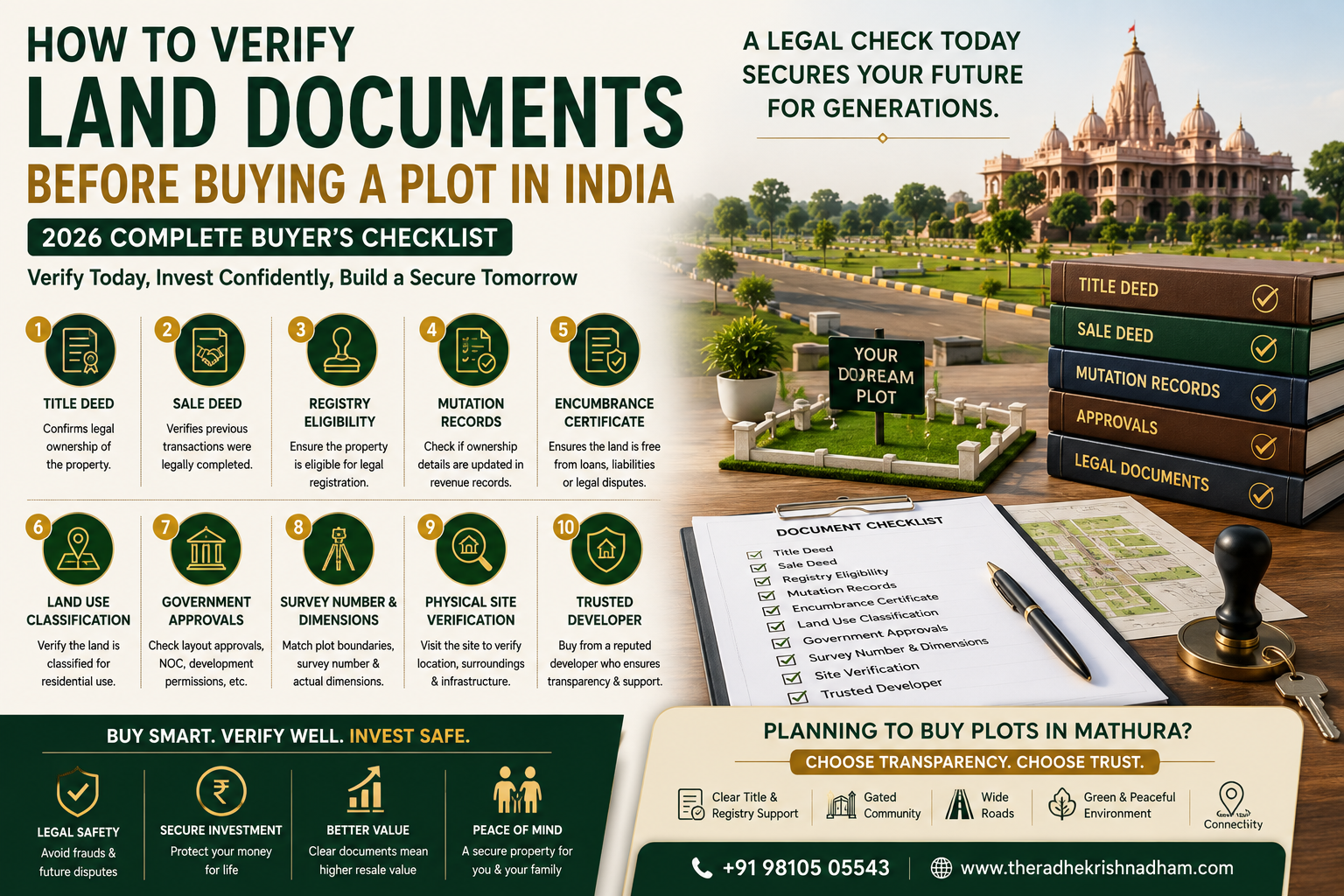
How to Verify Land Documents Before Buying a Plot in India (2026 Complete Checklist)

Buying a Plot? Verify the Documents Before You Invest

Buying a residential plot is a dream for many Indian families. Whether you're planning to build your dream home, secure your family's future, or make a long-term investment, purchasing land is a major financial decision.

However, one mistake can turn a valuable investment into a legal headache.

In recent years, the demand for Buy Plots in Mathura has increased due to better infrastructure, growing tourism, and rising residential development. While these opportunities are exciting, they also make it more important than ever to verify every legal document before finalizing a purchase.

Many buyers focus on the location, price, and future appreciation but overlook the legal aspects of the property. That's why understanding the document verification process is essential.

This guide explains the key land documents every buyer should verify before purchasing a residential plot in India.


Why Document Verification Matters

Legal verification protects your investment.

It helps you:

  • Avoid ownership disputes
  • Prevent fraud
  • Ensure smooth registration
  • Confirm the seller's legal rights
  • Reduce future legal complications
  • Improve resale value

A legally verified property gives buyers confidence and peace of mind.


1. Verify the Title Deed

The Title Deed is one of the most important legal documents.

It proves that the seller has the legal ownership rights to transfer the property.

Before purchasing, confirm:

  • Seller's name matches government records
  • Ownership is clear
  • No legal disputes exist
  • Property description matches the actual plot

If the title is unclear, consult a qualified property lawyer before proceeding.


2. Check the Sale Deed

The Sale Deed records the legal transfer of ownership.

It confirms that previous transactions were completed legally.

Carefully review:

  • Seller information
  • Buyer information
  • Property dimensions
  • Survey number
  • Registration details
  • Previous ownership records

The Sale Deed should be properly registered with the local Sub-Registrar Office.


3. Confirm Registry Eligibility

Before buying any residential plot, verify whether the property is eligible for legal registration.

Ask for:

  • Registry status
  • Registration history
  • Applicable government approvals

A plot that cannot be legally registered should always raise questions.


4. Verify Mutation Records

Mutation records show that the ownership details have been updated in the local revenue records after a property transfer.

Although mutation does not establish ownership, it confirms that government land records reflect the current owner.

Always ensure mutation records are updated before purchasing.


5. Check the Encumbrance Certificate

An Encumbrance Certificate (EC) helps buyers determine whether the property has any legal or financial liabilities.

It shows whether the land is:

  • Mortgaged
  • Under legal dispute
  • Used as collateral
  • Involved in pending transactions

A clear Encumbrance Certificate provides additional confidence before investing.


6. Verify Land Use Classification

Not every piece of land can be used for residential construction.

Always verify whether the land is classified as:

  • Residential
  • Agricultural
  • Commercial
  • Industrial

Buying residential plots with appropriate land-use permissions helps avoid future legal issues.


7. Check Government Approvals

Government approvals are equally important.

Depending on the project, verify approvals related to:

  • Layout plans
  • Development permissions
  • Local planning authority
  • Road access
  • Utility infrastructure

Proper approvals indicate that the development follows applicable planning regulations.


8. Verify Survey Number and Plot Dimensions

The physical plot should match official records.

Cross-check:

  • Survey number
  • Plot size
  • Boundary measurements
  • Site location

Small discrepancies today can become significant legal issues later.

A professional site survey can provide additional assurance.


9. Visit the Site Personally

Documents tell only part of the story.

A personal site visit allows buyers to verify:

  • Actual location
  • Road connectivity
  • Neighborhood
  • Infrastructure
  • Accessibility
  • Development progress

Never rely only on brochures or online photographs.


10. Purchase from a Trusted Developer

Choosing a reputable developer reduces many risks associated with property transactions.

A transparent developer typically provides:

  • Proper documentation
  • Clear communication
  • Legal assistance
  • Registration support
  • Professional customer service

Always research the developer's reputation before making your final decision. @


Why Buyers Trust The Radhe Krishna Dham

Purchasing a plot becomes easier when documentation and transparency are prioritized.

At The Radhe Krishna Dham, buyers receive professional guidance throughout the property buying process.

Project Highlights

  • Premium Residential Plots
  • Clear Title & Registry Support
  • Gated Community
  • Wide Internal Roads
  • Green & Peaceful Environment
  • Excellent Connectivity
  • Located in the sacred city of Mathura, the project combines planned infrastructure with a transparent buying experience for families and investors.

Land Document Verification Checklist

Before purchasing any residential plot, confirm the following:

  • Title Deed Verified
  • Sale Deed Reviewed
  • Registry Eligibility Confirmed
  • Mutation Records Updated
  • Encumbrance Certificate Checked
  • Land Use Verified
  • Government Approvals Available
  • Survey Number Matched
  • Physical Site Visit Completed
  • Trusted Developer Selected
  • Following this checklist can help buyers make informed and confident decisions. @

Frequently Asked Questions

Which document proves ownership of a plot?

The Title Deed is one of the primary documents that establishes legal ownership. Buyers should also review the Sale Deed and related government records.


What is an Encumbrance Certificate?

An Encumbrance Certificate indicates whether a property has financial liabilities, legal disputes, or existing mortgages. It helps buyers verify that the property has a clear transaction history.


Why is mutation important?

Mutation updates ownership details in local land revenue records after a property transfer. It ensures that government records reflect the current owner.


Can I buy a plot without checking government approvals?

It is strongly recommended to verify all applicable approvals before purchasing any property to avoid legal and regulatory issues.


Why should I visit the property before buying?

A site visit helps verify the actual condition of the land, surrounding infrastructure, road access, neighborhood, and whether the physical property matches the documents.


Final Thoughts

Buying land is not only about choosing the right location. It is equally important to ensure that every legal document has been carefully verified.

A well-informed buyer is far less likely to face ownership disputes, registration issues, or unexpected legal complications.

If you're planning to Buy Plots in Mathura, choosing a professionally planned project like The Radhe Krishna Dhamcan provide both transparency and confidence throughout your property-buying journey.


About the Author

This article has been prepared by the real estate research team at The Radhe Krishna Dham. Drawing on industry best practices, property documentation standards, and buyer awareness, our goal is to help families make informed, transparent, and confident real estate decisions.