

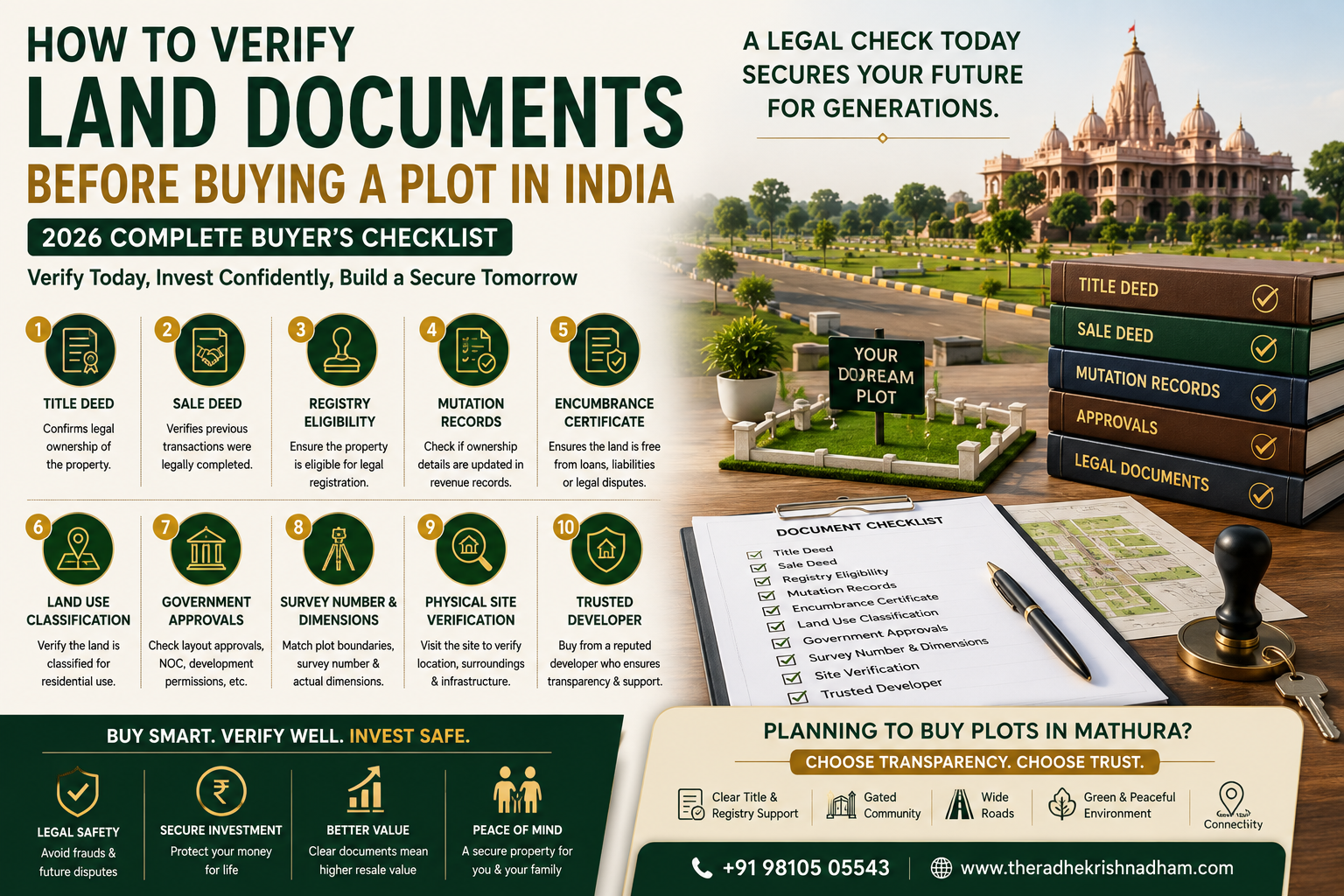
Buying a Plot? Verify the Documents Before You Invest
Buying a residential plot is a dream for many Indian families. Whether you're planning to build your dream home, secure your family's future, or make a long-term investment, purchasing land is a major financial decision.
However, one mistake can turn a valuable investment into a legal headache.
In recent years, the demand for Buy Plots in Mathura has increased due to better infrastructure, growing tourism, and rising residential development. While these opportunities are exciting, they also make it more important than ever to verify every legal document before finalizing a purchase.
Many buyers focus on the location, price, and future appreciation but overlook the legal aspects of the property. That's why understanding the document verification process is essential.
This guide explains the key land documents every buyer should verify before purchasing a residential plot in India.
Why Document Verification Matters
Legal verification protects your investment.
It helps you:
- Avoid ownership disputes
- Prevent fraud
- Ensure smooth registration
- Confirm the seller's legal rights
- Reduce future legal complications
- Improve resale value
A legally verified property gives buyers confidence and peace of mind.
1. Verify the Title Deed
The Title Deed is one of the most important legal documents.
It proves that the seller has the legal ownership rights to transfer the property.
Before purchasing, confirm:
- Seller's name matches government records
- Ownership is clear
- No legal disputes exist
- Property description matches the actual plot
If the title is unclear, consult a qualified property lawyer before proceeding.
2. Check the Sale Deed
The Sale Deed records the legal transfer of ownership.
It confirms that previous transactions were completed legally.
Carefully review:
- Seller information
- Buyer information
- Property dimensions
- Survey number
- Registration details
- Previous ownership records
The Sale Deed should be properly registered with the local Sub-Registrar Office.
3. Confirm Registry Eligibility
Before buying any residential plot, verify whether the property is eligible for legal registration.
Ask for:
- Registry status
- Registration history
- Applicable government approvals
A plot that cannot be legally registered should always raise questions.
4. Verify Mutation Records
Mutation records show that the ownership details have been updated in the local revenue records after a property transfer.
Although mutation does not establish ownership, it confirms that government land records reflect the current owner.
Always ensure mutation records are updated before purchasing.
5. Check the Encumbrance Certificate
An Encumbrance Certificate (EC) helps buyers determine whether the property has any legal or financial liabilities.
It shows whether the land is:
- Mortgaged
- Under legal dispute
- Used as collateral
- Involved in pending transactions
A clear Encumbrance Certificate provides additional confidence before investing.
6. Verify Land Use Classification
Not every piece of land can be used for residential construction.
Always verify whether the land is classified as:
- Residential
- Agricultural
- Commercial
- Industrial
Buying residential plots with appropriate land-use permissions helps avoid future legal issues.
7. Check Government Approvals
Government approvals are equally important.
Depending on the project, verify approvals related to:
- Layout plans
- Development permissions
- Local planning authority
- Road access
- Utility infrastructure
Proper approvals indicate that the development follows applicable planning regulations.
8. Verify Survey Number and Plot Dimensions
The physical plot should match official records.
Cross-check:
- Survey number
- Plot size
- Boundary measurements
- Site location
Small discrepancies today can become significant legal issues later.
A professional site survey can provide additional assurance.
9. Visit the Site Personally
Documents tell only part of the story.
A personal site visit allows buyers to verify:
- Actual location
- Road connectivity
- Neighborhood
- Infrastructure
- Accessibility
- Development progress
Never rely only on brochures or online photographs.
10. Purchase from a Trusted Developer
Choosing a reputable developer reduces many risks associated with property transactions.
A transparent developer typically provides:
- Proper documentation
- Clear communication
- Legal assistance
- Registration support
- Professional customer service
Always research the developer's reputation before making your final decision. @
Why Buyers Trust The Radhe Krishna Dham
Purchasing a plot becomes easier when documentation and transparency are prioritized.
At The Radhe Krishna Dham, buyers receive professional guidance throughout the property buying process.
Project Highlights
- Premium Residential Plots
- Clear Title & Registry Support
- Gated Community
- Wide Internal Roads
- Green & Peaceful Environment
- Excellent Connectivity
- Located in the sacred city of Mathura, the project combines planned infrastructure with a transparent buying experience for families and investors.
Land Document Verification Checklist
Before purchasing any residential plot, confirm the following:
- Title Deed Verified
- Sale Deed Reviewed
- Registry Eligibility Confirmed
- Mutation Records Updated
- Encumbrance Certificate Checked
- Land Use Verified
- Government Approvals Available
- Survey Number Matched
- Physical Site Visit Completed
- Trusted Developer Selected
- Following this checklist can help buyers make informed and confident decisions. @
Frequently Asked Questions
Which document proves ownership of a plot?
The Title Deed is one of the primary documents that establishes legal ownership. Buyers should also review the Sale Deed and related government records.
What is an Encumbrance Certificate?
An Encumbrance Certificate indicates whether a property has financial liabilities, legal disputes, or existing mortgages. It helps buyers verify that the property has a clear transaction history.
Why is mutation important?
Mutation updates ownership details in local land revenue records after a property transfer. It ensures that government records reflect the current owner.
Can I buy a plot without checking government approvals?
It is strongly recommended to verify all applicable approvals before purchasing any property to avoid legal and regulatory issues.
Why should I visit the property before buying?
A site visit helps verify the actual condition of the land, surrounding infrastructure, road access, neighborhood, and whether the physical property matches the documents.
Final Thoughts
Buying land is not only about choosing the right location. It is equally important to ensure that every legal document has been carefully verified.
A well-informed buyer is far less likely to face ownership disputes, registration issues, or unexpected legal complications.
If you're planning to Buy Plots in Mathura, choosing a professionally planned project like The Radhe Krishna Dhamcan provide both transparency and confidence throughout your property-buying journey.
About the Author
This article has been prepared by the real estate research team at The Radhe Krishna Dham. Drawing on industry best practices, property documentation standards, and buyer awareness, our goal is to help families make informed, transparent, and confident real estate decisions.